Understanding the Air Quality Index (AQI): How It Works and What It Tells Us
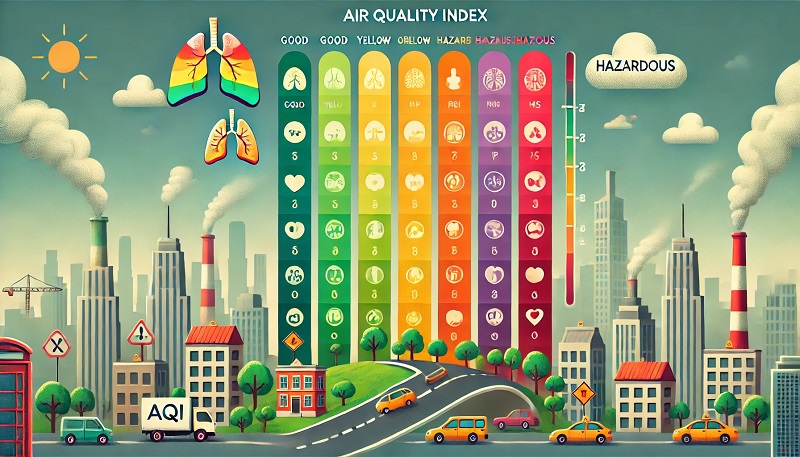
The Air Quality Index (AQI) is a measure used to communicate how clean or polluted the air is in a specific area, along with any potential health effects. It translates complex air quality data into a simple, color-coded scale that helps the public understand how the air quality might impact their health.
How Does the AQI Work?
The AQI is calculated by monitoring pollutants in the air, such as ground-level ozone, particulate matter (PM2.5 and PM10), carbon monoxide, sulfur dioxide, and nitrogen dioxide. Each pollutant is assigned a value based on its concentration in the air, which then contributes to an overall AQI score. This score is divided into six categories, each representing a different level of health concern, from good (low levels of pollution) to hazardous (extremely unhealthy levels).
What Does the AQI Tell Us?
The AQI is a valuable tool that helps individuals, especially those with respiratory conditions, children, and the elderly, make informed decisions about outdoor activities. By understanding the AQI, people can better protect their health and plan their day-to-day activities accordingly, reducing exposure during times of higher pollution.
In short, the AQI simplifies complex air quality data, providing a clear, easy-to-understand overview of air pollution and its potential health risks.
How is the AQI Work?
The Air Quality Index (AQI) is a key tool developed by government agencies to communicate the level of air pollution to the public. It helps individuals understand whether the air in their community is safe to breathe or poses health risks. The AQI is determined by measuring the concentrations of major pollutants in the air and translating those measurements into a scale from 0 to 500. The higher the AQI value, the greater the level of air pollution and its associated health risks.
How Does the AQI Work?
The AQI is divided into six color-coded categories, each representing a different level of health concern. These categories help people quickly gauge the severity of air pollution:
Green (0–50): Good
Air quality is considered satisfactory, with little or no risk to health.
Yellow (51–100): Moderate
Air quality is acceptable, though there may be a minor risk for individuals who are unusually sensitive to air pollution.
Orange (101–150): Unhealthy for Sensitive Groups
Members of sensitive groups (e.g., children, elderly, people with heart/lung conditions) may experience health effects, while the general public is not likely to be affected.
Red (151–200): Unhealthy
Everyone may begin to experience health effects, with more serious effects for sensitive groups.
Purple (201–300): Very Unhealthy
This triggers a health alert, indicating that everyone may experience more severe health effects.
Maroon (301 and higher): Hazardous
This represents emergency conditions where the entire population is more likely to be affected by health risks.
Pollutants Measured by AQI
The AQI is calculated based on the levels of five major pollutants regulated by the U.S. Environmental Protection Agency (EPA):
Ground-level ozone
Particle pollution (PM2.5 and PM10)
Carbon monoxide
Sulfur dioxide
Nitrogen dioxide
Health Implications and Protective Actions
When the AQI reaches unhealthy levels, especially in the orange category or higher, it is recommended to take steps to protect your health. This includes limiting outdoor activities, staying indoors, using air purifiers, and following official advisories. Sensitive groups should be extra cautious when AQI values exceed 100, as they are more vulnerable to the effects of pollution.
By monitoring the AQI daily, people can take informed steps to protect their health and avoid the harmful effects of air pollution.
वायु गुणवत्ता सूचकांक (AQI) एक प्रमुख उपकरण है जिसे सरकारी एजेंसियों द्वारा विकसित किया गया है ताकि लोगों को यह जानकारी दी जा सके कि वर्तमान में हवा कितनी प्रदूषित है या भविष्य में कितनी प्रदूषित होने की संभावना है। यह सूचकांक वायु प्रदूषण के स्तर को 0 से 500 के पैमाने पर मापता है। जितना अधिक AQI का मान होता है, वायु प्रदूषण का स्तर और उससे संबंधित स्वास्थ्य जोखिम उतने ही अधिक होते हैं।
AQI कैसे काम करता है?
AQI को छह रंग-कोडित श्रेणियों में विभाजित किया गया है, जो विभिन्न स्तरों की स्वास्थ्य चिंताओं को दर्शाते हैं। ये श्रेणियां लोगों को जल्दी से प्रदूषण के स्तर को समझने में मदद करती हैं:
हरा (0–50): अच्छा
हवा की गुणवत्ता संतोषजनक है और स्वास्थ्य के लिए कोई जोखिम नहीं है।
पीला (51–100): मध्यम
हवा की गुणवत्ता स्वीकार्य है, लेकिन असामान्य रूप से संवेदनशील लोगों के लिए कुछ जोखिम हो सकता है।
नारंगी (101–150): संवेदनशील समूहों के लिए अस्वास्थ्यकर
संवेदनशील समूहों (जैसे बच्चे, बुजुर्ग, और हृदय/फेफड़ों की बीमारियों वाले लोग) को स्वास्थ्य संबंधी समस्याएं हो सकती हैं, जबकि सामान्य जनता पर इसका कम प्रभाव होता है।
लाल (151–200): अस्वास्थ्यकर
सभी को स्वास्थ्य समस्याओं का सामना करना पड़ सकता है, और संवेदनशील समूहों को अधिक गंभीर समस्याएं हो सकती हैं।
बैंगनी (201–300): बहुत अस्वास्थ्यकर
यह स्वास्थ्य चेतावनी का संकेत है, और सभी लोगों को गंभीर स्वास्थ्य समस्याओं का सामना करना पड़ सकता है।
भूरा (301 और अधिक): खतरनाक
यह आपातकालीन स्थिति का संकेत है, जिसमें सभी को स्वास्थ्य समस्याओं का सामना करना अधिक संभावित है।
AQI द्वारा मापे जाने वाले प्रदूषक
AQI पांच प्रमुख प्रदूषकों के स्तरों पर आधारित होता है, जिन्हें अमेरिकी पर्यावरण संरक्षण एजेंसी (EPA) द्वारा नियंत्रित किया जाता है:
जमीनी स्तर का ओजोन
कण प्रदूषण (PM2.5 और PM10)
कार्बन मोनोऑक्साइड
सल्फर डाइऑक्साइड
नाइट्रोजन डाइऑक्साइड
स्वास्थ्य पर प्रभाव और सुरक्षा के उपाय
जब AQI का स्तर 100 से अधिक हो जाता है, खासकर नारंगी श्रेणी में या उससे ऊपर, तो स्वास्थ्य की सुरक्षा के लिए कदम उठाने की सलाह दी जाती है। इसमें बाहरी गतिविधियों को सीमित करना, घर के अंदर रहना, वायु शोधक का उपयोग करना और सरकारी निर्देशों का पालन करना शामिल है। संवेदनशील समूहों को AQI मान 100 से अधिक होने पर विशेष सतर्कता बरतनी चाहिए, क्योंकि वे प्रदूषण के प्रभावों के प्रति अधिक संवेदनशील होते हैं।
AQI की नियमित निगरानी करके लोग वायु प्रदूषण के हानिकारक प्रभावों से बचने और अपनी सुरक्षा के लिए आवश्यक कदम उठा सकते हैं।