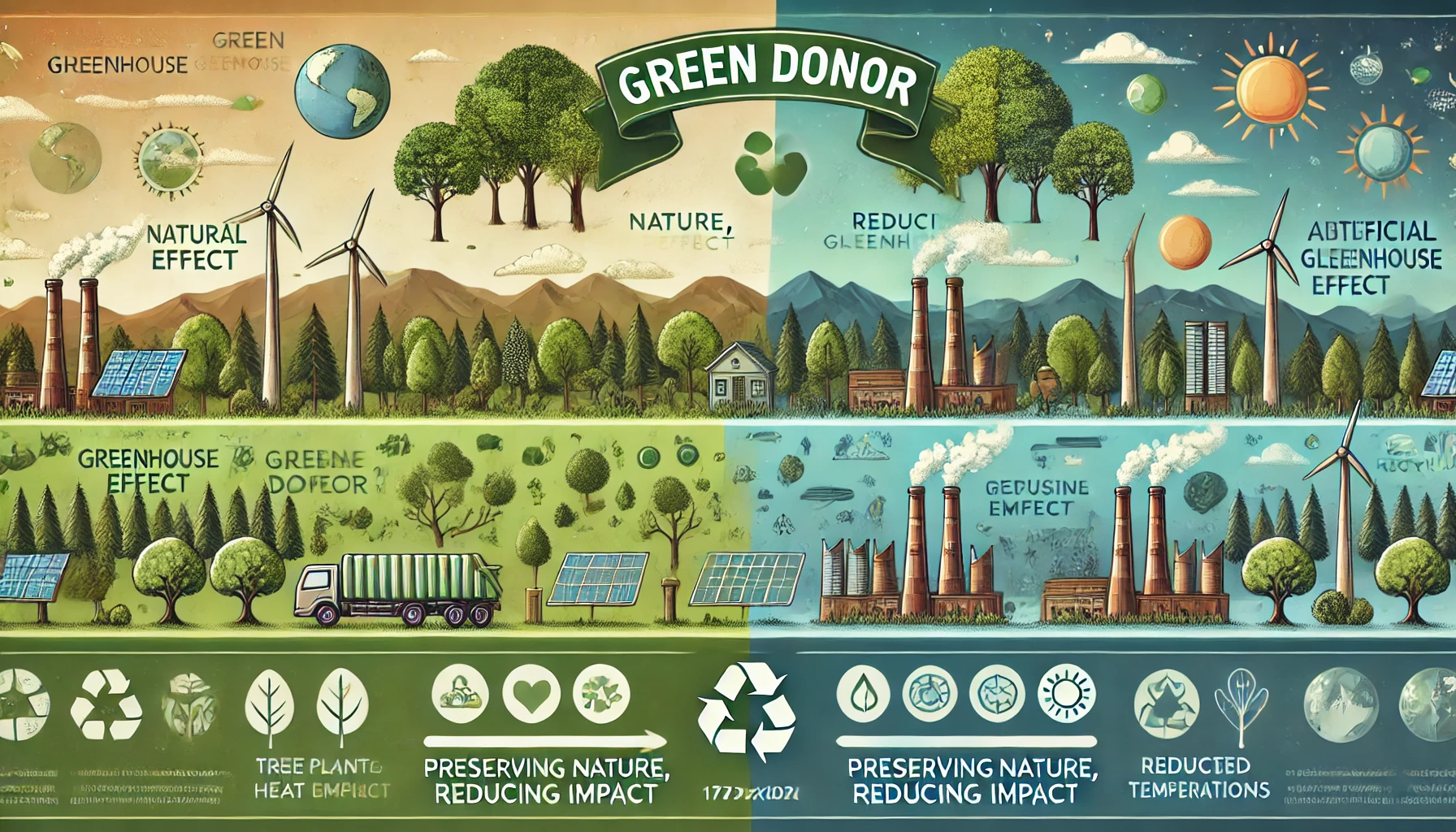
The Greenhouse Effect can be of two types: natural and artificial (human-made) greenhouse effects. The distinction between these two depends on whether the emission of greenhouse gases originates from natural sources or human activities.
1. Natural Greenhouse Effect
The natural greenhouse effect is essential for sustaining life on Earth. The Earth’s atmosphere absorbs some of the heat coming from the Sun and reflects some of it back into space. Greenhouse gases, like carbon dioxide, methane, and water vapor, trap this heat, maintaining the Earth’s average temperature at approximately 15°C. Without this natural greenhouse effect, the Earth’s temperature would be much lower, making it impossible for life to exist.
2. Artificial (Human-made) Greenhouse Effect
The artificial greenhouse effect mainly results from human activities, such as burning fossil fuels, industrial emissions, deforestation, and excessive use of chemicals in agriculture. These activities have caused greenhouse gas levels in the atmosphere to increase abnormally, trapping more heat and leading to global warming. This artificial effect has been rapidly increasing the Earth’s temperature, which is harmful to both the environment and human life.
Differences Between Natural and Artificial Greenhouse Effects
The primary difference lies in their origins and impacts. While the natural greenhouse effect maintains a balanced temperature suitable for life, the artificial greenhouse effect, caused by human actions, leads to excessive warming, resulting in environmental issues and climate change.
Steps to Control the Artificial Greenhouse Effect and Move Towards a Natural Balance
We can take steps to control the artificial greenhouse effect and return to a natural greenhouse balance:
1. Reduce Fossil Fuel Usage: By decreasing the use of fossil fuels such as coal, oil, and gas, we can lower carbon dioxide levels in the atmosphere. Renewable energy sources like solar, wind, and hydroelectric power can be promoted as alternatives.
2. Encourage Tree Planting and Forest Conservation: Trees absorb carbon dioxide and provide us with clean oxygen. By promoting tree planting and preventing deforestation, we can help reduce CO₂ levels in the atmosphere.
3. Recycling and Reuse: Recycling waste and reusing materials can reduce methane emissions, which is one of the greenhouse gases.
4. Changes in Transportation: To reduce the carbon footprint, public transport, cycling, and electric vehicles can be used. Carpooling and walking are also effective in reducing emissions.
5. Adopting Clean Energy: Using clean energy sources like solar, wind, and hydro in industries and power production can help reduce pollution.
6. Social Awareness: Increasing awareness about the greenhouse effect and climate change encourages people to make changes in their daily lives. Helping people understand how small efforts can lead to significant changes is crucial.
Conclusion
The natural greenhouse effect is beneficial for life, and to maintain its balance, we must be mindful of our actions. By controlling the artificial greenhouse effect and adopting eco-friendly lifestyles, we can sustain the natural greenhouse effect. This is essential not only for the environment but also for ensuring a safe and green world for future generations.