Noise Pollution: Problems and Solutions
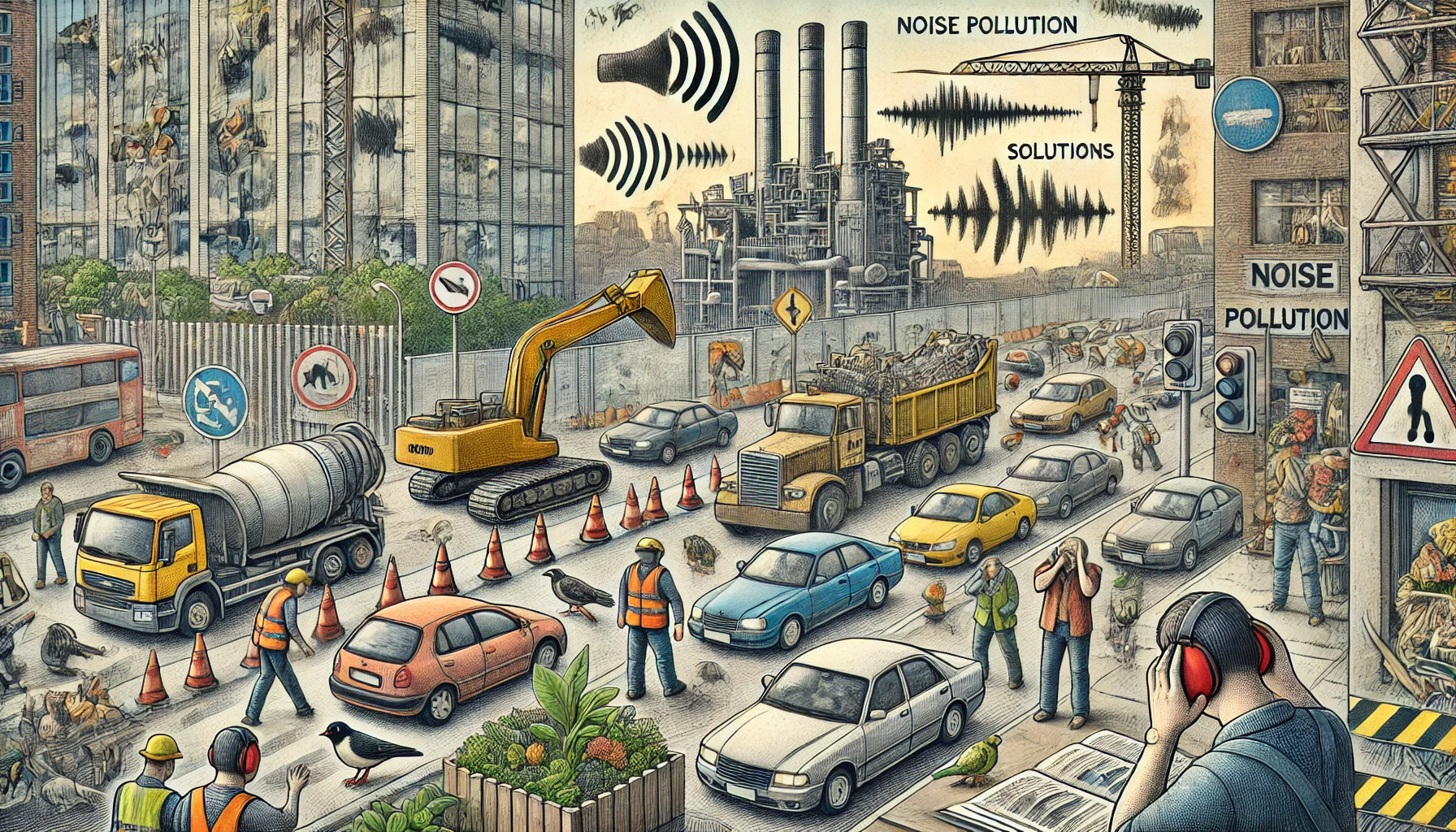
Noise pollution, or excessive noise, refers to any unwanted and disruptive sounds that impact human and animal life. Sounds above 40 decibels are considered intolerable and fall into the category of noise pollution.
Main Causes of Noise Pollution:
– *Traffic and Rising Vehicle Numbers:* In large cities, the increasing number of vehicles, including pressure horns and other noise sources, contribute to noise pollution.
– *Poor Urban Planning:* Population growth and unorganized urbanization promote noise pollution.
– *Heavy Machinery in Industries:* Large machines used in heavy industries generate substantial noise.
– *Weddings and Festivities:* Excessive use of loudspeakers, firecrackers, and amplified sounds during celebrations.
– *Misuse of Natural Resources:* Deforestation and a lack of greenery exacerbate noise issues.
Effects of Noise Pollution:
1. *Health Effects:* Noise pollution causes irritability, headaches, high blood pressure, insomnia, and an increased risk of heart attacks.
2. *Mental Disorders:* Excessive noise negatively impacts mental health, contributing to stress and memory impairment.
3. *Impact on Wildlife:* Noise disrupts the lifestyle, breeding, and feeding habits of animals and birds. Marine life, such as whales, is also affected.
Measures to Prevent Noise Pollution:
1. *Awareness:* It is essential to raise awareness about the adverse effects of noise pollution.
2. *Urban Greenery:* Planting more trees can reduce noise pollution by 10-15 decibels.
3. *Use of Low-Noise Machinery:* Industries should be moved to soundproof buildings, and old vehicles should be phased out.
4. *Restricted Use of Loudspeakers and Horns:* Limiting the use of loudspeakers and unnecessary honking.
5. *Environment-Friendly Urban Planning:* Airports and large industries should be located away from populated areas.
6. *Tree Conservation:* Planting and preserving trees not only helps reduce noise pollution but also controls air pollution.
Legal Measures:
The government has implemented the Noise Pollution (Regulation and Control) Rules, 2000, under the Environment Protection Act, 1986. These rules restrict the use of loudspeakers in public places and ban devices that produce excessive noise. Amendments in 2010 strengthened these rules to control noise pollution further.
Noise pollution is proving fatal for both humans and wildlife. If solid steps are not taken in time, there will be severe consequences in the future.
*Conclusion:*
Noise pollution is a serious issue that requires collective efforts for solutions. Until we all understand this problem individually and collectively and contribute to its solution, its impact will continue to grow. By planting trees, spreading awareness, and following legal guidelines, we can control noise pollution. *ध्वनि प्रदूषण: समस्या और समाधान*
ध्वनि प्रदूषण या अत्यधिक शोर उन सभी अनचाही और अनुपयोगी ध्वनियों को संदर्भित करता है, जो मानव और अन्य जीव-जंतुओं के जीवन पर नकारात्मक प्रभाव डालती हैं। 40 डेसीबल से अधिक की आवाज़ को असहनीय माना जाता है और यह ध्वनि प्रदूषण की श्रेणी में आती है।
ध्वनि प्रदूषण के मुख्य कारण:
– *यातायात और वाहनों की संख्या में वृद्धि:* बड़े शहरों में वाहनों की बढ़ती संख्या, प्रेशर हॉर्न और अन्य शोर के स्रोत, ध्वनि प्रदूषण में योगदान करते हैं।
– *खराब शहरी नियोजन:* जनसंख्या वृद्धि और अव्यवस्थित शहरीकरण ध्वनि प्रदूषण को बढ़ावा देते हैं।
– *उद्योगों में भारी मशीनरी:* भारी उद्योगों में उपयोग की जाने वाली मशीनों द्वारा उत्पन्न शोर।
– *शादी और उत्सव:* लाउडस्पीकर, पटाखों और शादियों व त्योहारों में ध्वनि विस्तार का अत्यधिक उपयोग।
– *प्राकृतिक संसाधनों का दुरुपयोग:* पेड़ों की कटाई और हरियाली की कमी।
ध्वनि प्रदूषण के प्रभाव:
1. *स्वास्थ्य पर प्रभाव:* ध्वनि प्रदूषण से चिड़चिड़ापन, सिरदर्द, उच्च रक्तचाप, नींद न आना और दिल के दौरे का खतरा बढ़ता है।
2. *मानसिक विकार:* अत्यधिक शोर मानसिक स्वास्थ्य पर बुरा असर डालता है, जिससे तनाव और याददाश्त की कमजोरी हो सकती है।
3. *वन्य जीवन पर प्रभाव:* शोर के कारण पशु-पक्षियों की जीवनशैली, प्रजनन, और भोजन की आदतें प्रभावित होती हैं। समुद्री जीव, जैसे व्हेल भी इससे प्रभावित होते हैं।
ध्वनि प्रदूषण रोकने के उपाय:
1. *जागरूकता फैलाना:* लोगों को ध्वनि प्रदूषण के दुष्प्रभावों के बारे में जागरूक करना आवश्यक है।
2. *शहरी हरियाली:* अधिक पेड़-पौधे लगाकर ध्वनि प्रदूषण को 10-15 डेसीबल तक कम किया जा सकता है।
3. *कम आवाज़ वाली मशीनों का उपयोग:* उद्योगों को साउंडप्रूफ इमारतों में स्थानांतरित करना चाहिए और पुराने वाहनों का उपयोग बंद करना चाहिए।
4. *लाउडस्पीकर और हॉर्न का सीमित उपयोग:* लाउडस्पीकर और अनावश्यक हॉर्न का उपयोग सीमित करना।
5. *पर्यावरण-अनुकूल शहरी नियोजन:* हवाई अड्डों और बड़े उद्योगों को आबादी वाले क्षेत्रों से दूर रखना।
6. *पेड़-पौधों का संरक्षण:* पेड़-पौधे लगाने से न केवल ध्वनि प्रदूषण कम होगा बल्कि वायु प्रदूषण पर भी नियंत्रण पाया जा सकेगा।
कानूनी उपाय:
सरकार ने पर्यावरण संरक्षण अधिनियम 1986 के तहत ध्वनि प्रदूषण (विनियमन और नियंत्रण) नियम, 2000 लागू किए हैं। इसके तहत सार्वजनिक स्थलों पर लाउडस्पीकर का उपयोग और अत्यधिक ध्वनि उत्पन्न करने वाले उपकरणों पर रोक है। 2010 में इस नियम में संशोधन करके और भी सख्त प्रावधान बनाए गए हैं।
ध्वनि प्रदूषण मानव जाति और वन्यजीवों के लिए गंभीर खतरा साबित हो रहा है। यदि समय रहते ठोस कदम नहीं उठाए गए, तो भविष्य में इसके भयंकर परिणाम भुगतने पड़ सकते हैं।
*निष्कर्ष:*
ध्वनि प्रदूषण एक गंभीर समस्या है, जिसके समाधान के लिए सामूहिक प्रयासों की आवश्यकता है। जब तक हम सभी इस समस्या को व्यक्तिगत और सामूहिक रूप से समझकर इसके समाधान में योगदान नहीं देंगे, इसका प्रभाव बढ़ता रहेगा। पेड़-पौधे लगाकर, जागरूकता फैलाकर और कानूनी नियमों का पालन करके हम ध्वनि प्रदूषण को नियंत्रित कर सकते हैं।