India’s Great Green Wall: A Vision to Halt Desertification and Restore Ecosystems
India’s Great Green Wall: A Vision to Halt Desertification and Restore Ecosystems
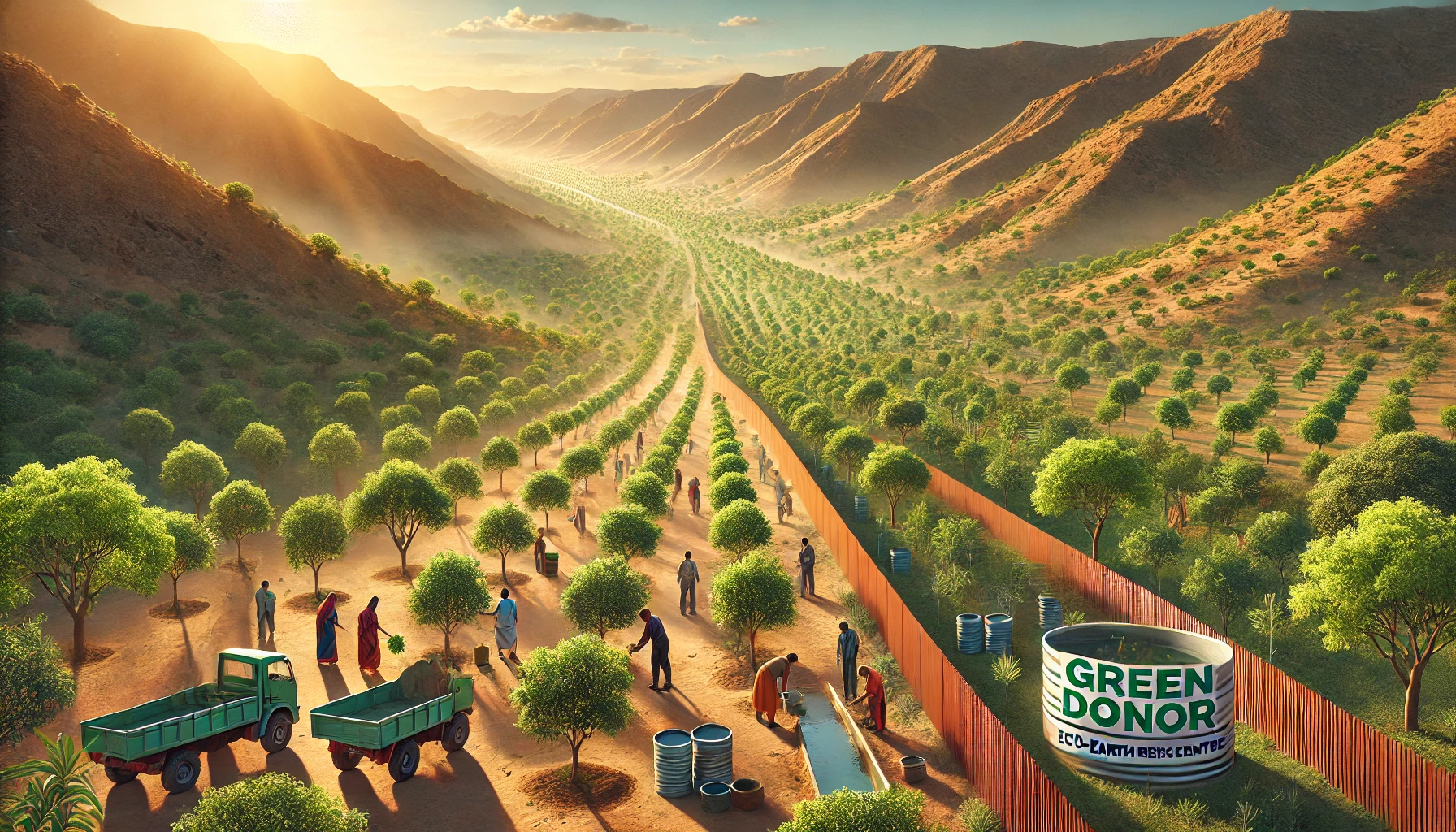
The Great Green Wall of India is an ambitious, visionary project aimed at combating desertification across the country’s arid and semi-arid landscapes. Spanning 1,400 kilometers, this green corridor will stretch from Gujarat to Delhi along the Aravalli mountain range. By restoring degraded lands, planting trees, and promoting sustainable practices, India hopes to address critical issues like soil erosion, groundwater depletion, and loss of biodiversity.
This large-scale afforestation project is inspired by the African Union’s “Great Green Wall” initiative, which is creating a natural barrier across the Sahel region to curb desertification. With similar goals but uniquely Indian challenges, India’s green wall could significantly enhance ecosystem resilience, improve livelihoods, and offer a natural solution to the country’s desertification problem.
“At Green Donor, we believe that the spirit of environmental stewardship comes alive when communities are engaged in the process of ecological restoration. India’s Great Green Wall reflects a commitment to Mother Nature, much like our own vision at Green Donor, to leave a legacy of green for generations to come.” – Veerji Sahib, Founder of Green Donor
The Challenge of Desertification in India
Desertification—defined as land degradation in arid, semi-arid, and dry sub-humid areas due to human and climatic factors—poses a major environmental threat to India. According to the Desertification and Land Degradation Atlas by ISRO, approximately 29% of India’s total geographical area is facing desertification. This degradation directly impacts soil fertility, water availability, agricultural productivity, and biodiversity.
States like Rajasthan, Gujarat, Haryana, and Punjab are particularly vulnerable due to their arid climate and high dependency on agriculture. The Aravalli range, which spans these regions, has faced severe deforestation and degradation, intensifying desertification risks.
Goals and Scope of India’s Great Green Wall
The Great Green Wall of India is designed to address these critical environmental issues, aiming to:
- Combat Desertification: By stabilizing soils, reducing wind erosion, and creating vegetation cover, the wall will serve as a buffer against the desert’s expansion.
- Enhance Biodiversity: The corridor will create habitats for native flora and fauna, promoting species conservation.
- Restore Ecosystems: Through afforestation and reforestation efforts, the project will improve soil fertility and water retention.
- Promote Sustainable Livelihoods: Involving local communities will support economic opportunities through ecotourism, sustainable agriculture, and forest-based products.
- Climate Change Mitigation: The green corridor has the potential to act as a carbon sink, helping mitigate climate change impacts.
“The Green Donor Mother Panel proudly supports initiatives like the Great Green Wall, which honor nature’s delicate balance by protecting, enriching, and regenerating our ecosystems.” – Green Donor Mother Panel
Key Components of the Project
For India’s Great Green Wall to succeed, several components and strategies are essential:
1. Tree Planting and Vegetation Cover
The green wall project will involve planting a variety of native and drought-resistant tree species that thrive in arid and semi-arid environments, such as neem, acacia, and banyan. Native species are better adapted to local conditions, ensuring resilience to climate variability.
2. Water Conservation and Management
To sustain the trees in arid regions, innovative water management techniques are critical. Strategies include:
- Water Harvesting: Capturing and storing rainwater to support vegetation growth.
- Soil Moisture Retention: Using mulching, contour trenches, and check dams to retain soil moisture and reduce runoff.
- Irrigation Support: Small-scale drip irrigation may be used in particularly dry areas to ensure plant survival, especially during the initial growth phases.
3. Soil Restoration and Erosion Control
The Great Green Wall will work to restore soil health through afforestation, agroforestry, and other soil conservation methods. Vegetation cover helps bind soil, preventing erosion caused by wind and water. Microbial and organic additives may also be used to improve soil fertility.
4. Community Involvement and Sustainable Livelihoods
Local communities will play a vital role in the project’s success. By involving them in planting, maintaining, and protecting the green belt, the project fosters ownership and ensures long-term sustainability. Communities may benefit through employment opportunities, such as nursery management, forest-based products, ecotourism, and sustainable agriculture.
“Involving local communities is essential, as they become the true custodians of nature. Through participation, education, and empowerment, Green Donor and initiatives like the Great Green Wall inspire the same vision: a harmonious relationship with our environment.” – Green Donor Mother Panel
5. Policy Support and Funding
Long-term policy backing is essential for the Great Green Wall’s success. The government’s support through consistent funding, clear land rights, and incentives for sustainable land use practices will be critical. Partnerships with NGOs, environmental organizations, and the private sector are also key to mobilizing resources and expertise.
Potential Benefits of the Great Green Wall
India’s Great Green Wall promises numerous ecological and socio-economic benefits if implemented effectively:
- Combating Soil Degradation: Increased vegetation will reduce soil erosion, enhancing soil fertility and productivity for agriculture.
- Improved Groundwater Levels: Trees and vegetation help improve rainwater infiltration, which recharges groundwater and supports nearby agricultural areas.
- Biodiversity Conservation: By creating continuous vegetation cover, the green wall provides habitats for diverse species, contributing to ecological balance.
- Economic Opportunities: Sustainable forest products, ecotourism, and jobs created through the project offer a means of livelihood for local communities, reducing poverty and rural-urban migration.
- Carbon Sequestration: The green wall’s vegetation will absorb CO₂ from the atmosphere, contributing to India’s climate action goals under the Paris Agreement.
Challenges and Limitations
Despite its potential, the Great Green Wall faces several significant challenges:
- Climate Variability: The project is highly vulnerable to the unpredictable effects of climate change, such as prolonged droughts, which can impact tree survival and growth rates.
- Long-term Maintenance: Establishing the green wall is just the first step; ongoing maintenance is necessary to ensure the trees’ survival and continued growth, which requires sustained funding and community involvement.
- Land Rights and Use Conflicts: Many areas along the proposed green belt are inhabited or used by local communities for grazing or agriculture. Managing land rights and addressing potential conflicts between conservation efforts and local land use is essential.
- Invasive Species: Care must be taken to avoid planting species that could become invasive, which could potentially harm local ecosystems and reduce biodiversity.
- Institutional Support: A large-scale, multi-decade project like the Great Green Wall requires consistent and coordinated action from multiple government departments, NGOs, and local stakeholders. Any lapse in institutional support could jeopardize progress.
Conclusion: A Vision for a Greener, Resilient India
India’s Great Green Wall stands as a beacon of hope against the advancing threats of desertification, land degradation, and climate change. It not only represents an environmental initiative but also an opportunity to transform rural economies, support local communities, and improve India’s climate resilience. With strategic planning, community engagement, and policy support, this green corridor could mark a turning point in India’s efforts to achieve sustainable land management and environmental conservation.
“At Green Donor, our pledge is to support Mother Earth with every tree planted, every resource saved, and every community empowered. India’s Great Green Wall is a testament to this spirit, showing us that sustainable solutions are possible when we work together.” – Green Donor Pledge