Environment and Gender in India: Sustainable Future
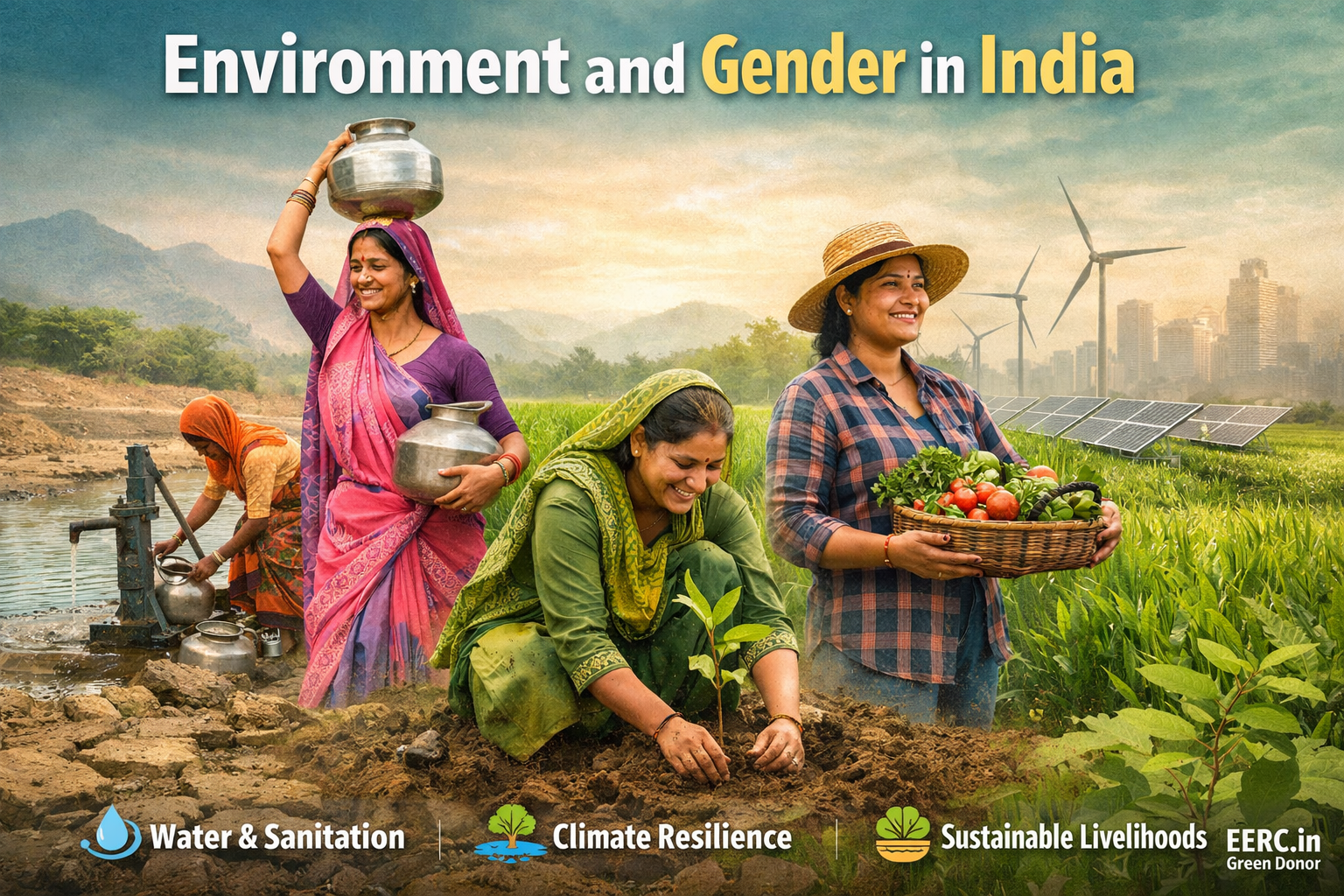
Environment and Gender in India: Towards Inclusive Sustainability
Environmental sustainability and gender equality are closely interconnected. In India, where environmental challenges such as air pollution, water scarcity, and climate change are widespread, their impact is not gender-neutral. Social roles, economic access, and cultural norms often determine how men and women experience environmental issues differently.
Understanding this relationship is essential for building policies that are both inclusive and effective. A gender-responsive approach ensures that environmental solutions benefit everyone equally while empowering vulnerable communities.
Gendered Impact of Environmental Issues in India
1. Water and Sanitation
In many parts of rural India, women and girls are responsible for collecting water. This task can take several hours daily, affecting their health, education, and economic opportunities. Lack of proper sanitation facilities also impacts women’s safety and dignity.
Although initiatives like Swachh Bharat Mission have improved sanitation coverage, challenges such as water availability, hygiene awareness, and infrastructure maintenance still remain.
2. Climate Change and Livelihoods
Climate change has a significant impact on agriculture, forests, and water resources—sectors where many Indian women are actively involved. Irregular rainfall, droughts, and floods directly affect their livelihoods.
Women often have limited access to land ownership, financial resources, and technology, which makes it harder for them to adapt to climate-related changes. Despite this, they play a crucial role in sustainable farming practices, water conservation, and community resilience.
3. Air Pollution and Health
Air pollution is a major concern in India, affecting both urban and rural populations. Women are particularly exposed to indoor air pollution due to traditional cooking methods using firewood or biomass fuels.
Prolonged exposure leads to respiratory diseases and other health issues. Efforts to promote clean cooking fuels and improve air quality are important steps toward reducing these risks.
Women as Agents of Environmental Change
Women are not just victims of environmental challenges—they are key contributors to solutions. Across India, women-led initiatives have successfully managed forests, improved water conservation, and promoted sustainable agriculture.
Their traditional knowledge and community engagement make them essential partners in environmental governance. Increasing their participation in decision-making processes leads to more effective and sustainable outcomes.
Policy and Governance in India
1. Gender Mainstreaming
Integrating gender perspectives into environmental policies ensures that both men’s and women’s needs are addressed. This includes considering gender differences in planning, implementation, and evaluation of environmental programs.
2. Data and Monitoring
Collecting gender-disaggregated data helps policymakers understand how environmental issues affect different groups. This leads to more targeted and effective interventions.
3. Education and Awareness
Promoting environmental education with a focus on gender equality empowers communities. Awareness programs can encourage both men and women to participate in conservation efforts.
4. Inclusive Infrastructure
Infrastructure development should consider the specific needs of women, including safe sanitation, accessible water sources, and climate-resilient systems. Such measures improve overall quality of life and community well-being.
Opportunities for India
India has the potential to lead in gender-responsive environmental action by:
- Promoting women’s participation in renewable energy and green jobs
- Supporting self-help groups in sustainable livelihoods
- Encouraging women-led climate initiatives
- Strengthening local governance with equal representation
These efforts can enhance both environmental sustainability and social equity.
The relationship between environment and gender is a critical aspect of sustainable development. In India, addressing environmental challenges through a gender-inclusive approach can lead to more balanced and long-lasting solutions.
Empowering women, improving access to resources, and ensuring equal participation in decision-making are key steps toward building a sustainable and equitable future.
#EnvironmentAndGender #GenderEquality #ClimateChangeIndia #SustainableDevelopment #WomenEmpowerment #EnvironmentalAwareness #IndiaEnvironment #ClimateAction #WaterCrisis #AirPollution