Cornell Discovery: Space Molecule Offers Clues to the Origins of Life
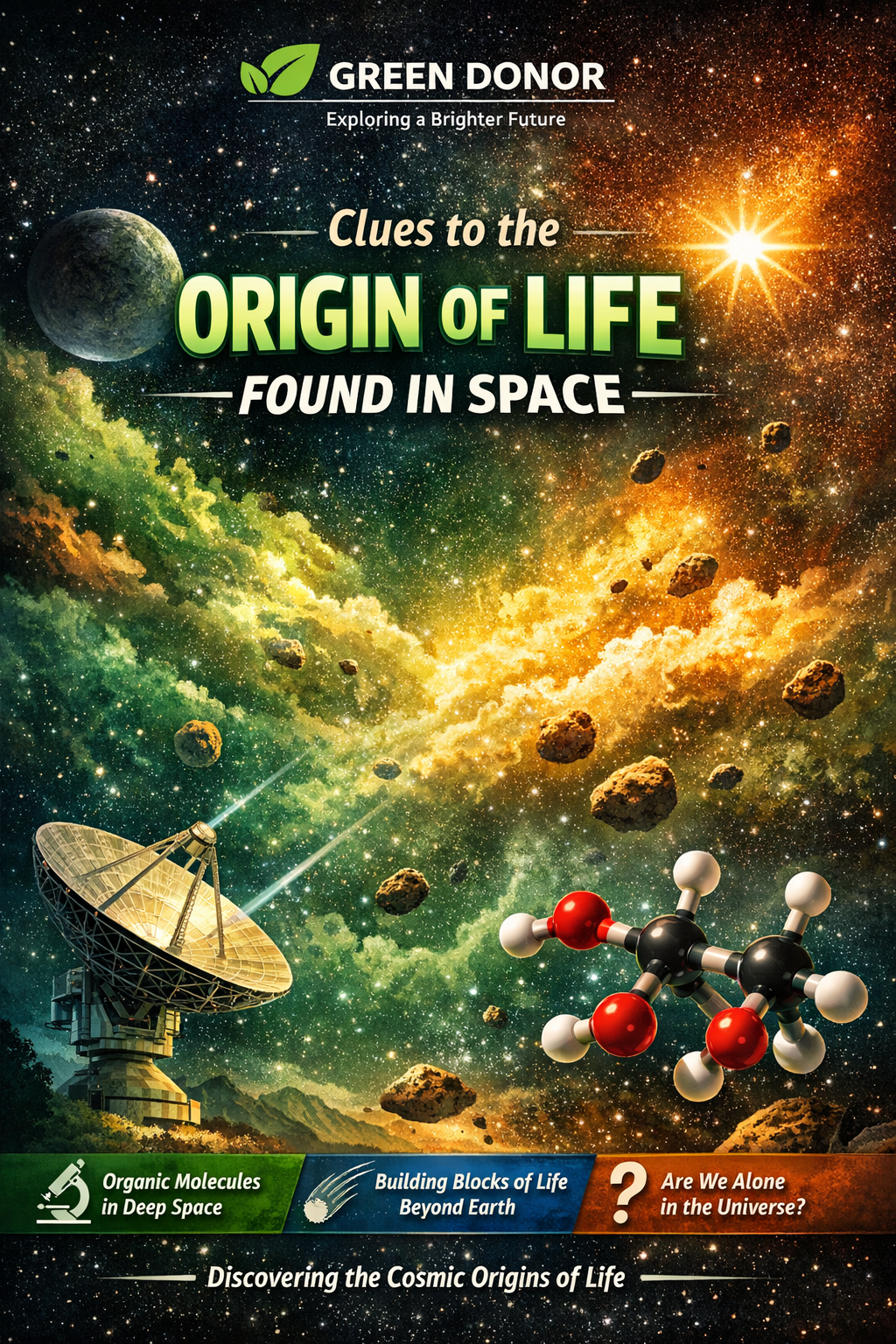
In a remarkable breakthrough, scientists have identified a complex organic molecule in deep space that may provide critical insights into how life began in the universe. This discovery strengthens the idea that the building blocks of life are not unique to Earth but may originate far beyond our planet.
A Molecule from the Depths of Space
Astronomers detected a rare carbon-based molecule known as isopropyl cyanide within a विशाल interstellar gas cloud located about 27,000 light-years away from Earth. Using advanced radio telescopes, researchers identified its unique chemical signature among countless other cosmic signals.
What makes this molecule special is its branched structure, a feature commonly found in biological molecules such as amino acids—the fundamental components of proteins and life itself.
Why This Discovery Matters
Most molecules previously detected in space had simple, straight-chain structures. The discovery of a branched molecule marks a significant leap in astrochemistry, suggesting that space is capable of producing far more complex compounds than previously believed.
Scientists now think that such molecules could form during the early stages of star formation and later become part of planets. This means that the ingredients necessary for life might have existed even before Earth was formed.
Implications for the Origin of Life
This finding supports a growing scientific idea that life’s chemical precursors may have been delivered to Earth from space. Meteorites and comets, rich in organic compounds, could have carried these molecules to our young planet, setting the stage for life to emerge.
The concept aligns with the theory that organic molecules can form naturally in the interstellar medium, the vast space between stars filled with gas and dust.
A New Frontier in Astrobiology
The discovery opens new possibilities in the search for life beyond Earth. If complex molecules can form in space so easily, it raises the likelihood that similar processes are occurring across the universe.
Scientists are now exploring how widespread such molecules are and whether they exist in regions where new stars and planets are forming. Each new discovery brings us closer to understanding one of humanity’s biggest questions: Are we alone in the universe?
Conclusion
The detection of a life-related molecule in space is more than just a scientific milestone—it is a window into our own origins. It suggests that life may not be an isolated phenomenon but part of a larger cosmic process.
As research continues, discoveries like this remind us that the story of life on Earth may have begun not just here, but among the stars.