Longing for Liberation
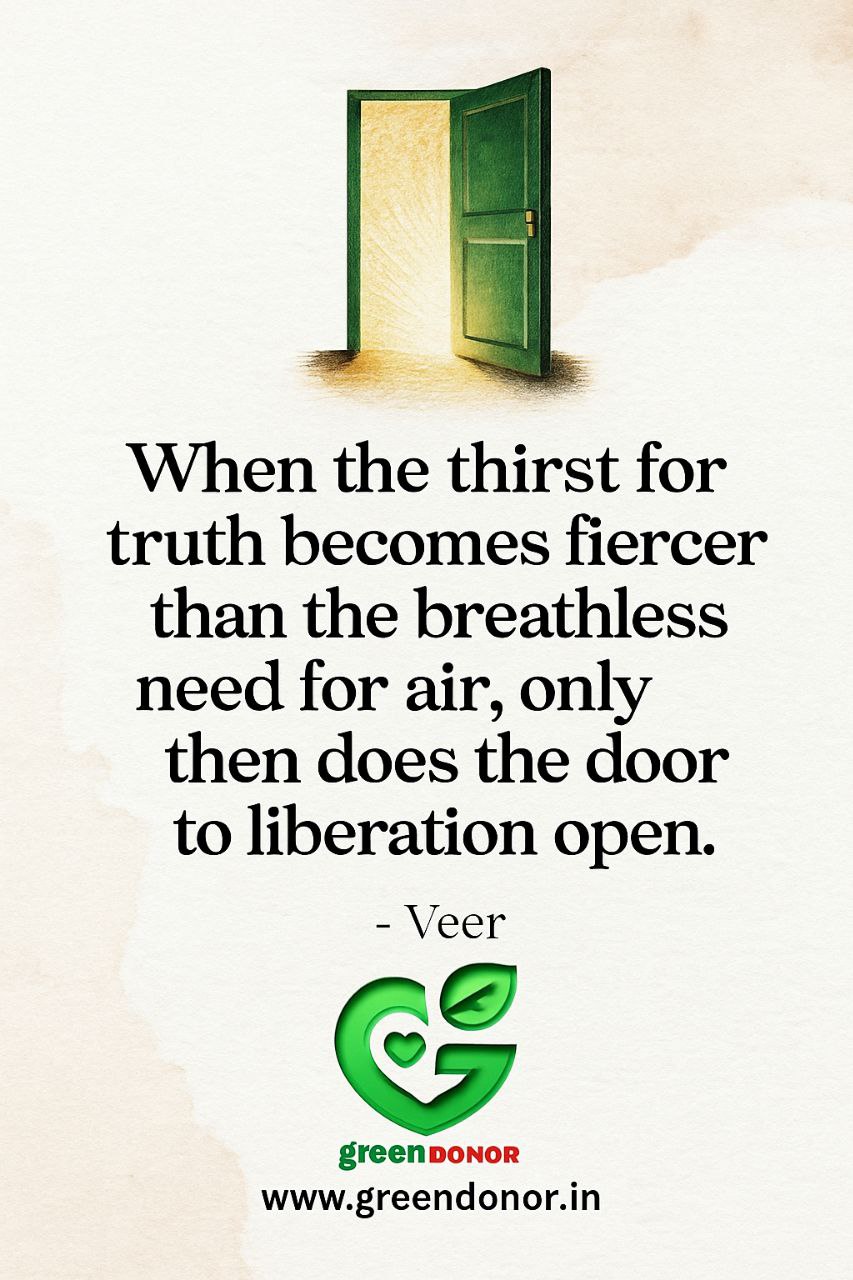
— Veer
For a seeker on the spiritual path, the most essential and ultimate qualification is an intense longing to be free — a burning desire to break the chains of ignorance and attachment. This yearning must not be a passive wish, but a blazing flame, a vital need — like air to the drowning man.
Renunciation and Longing — The Twin Pillars
Without Tyaga (Renunciation) and Mumukshutva (Desire for Liberation), no other spiritual discipline can bear fruit. Moral conduct or outer virtue may give the appearance of spirituality, but they do not lead to Self-realization unless this inner fire is awakened.
A Story to Illuminate the Point:
A student once approached a guru and said,
“Master, I want to learn from you the ultimate truth.”
The guru took him to the seashore and walked him into the ocean. As they reached deeper waters, the guru suddenly pushed the student’s head underwater.
At first, the student remained calm, believing it was a test. But as time passed and breath became scarce, he panicked, struggled, and neared unconsciousness. Just before he passed out, the guru pulled him up.
Angrily, the student shouted, “Are you mad? You almost drowned me!”
The guru, calm and unwavering, replied:
“When your desire for truth burns as intensely as your need for air just now, come back — and I will teach you.”
This tale reveals a profound truth: unless the longing for liberation becomes as urgent as the breath for a drowning man, no real spiritual journey begins.
________________________________________
The Four-fold Qualifications (Sādhana Chatuṣṭaya)
Vedantic tradition prescribes four essential qualities a seeker must develop:
- Viveka (Discrimination):
The ability to distinguish between the real (eternal) and the unreal (transient).
- Vairāgya (Dispassion):
Detachment from the impermanent, sensual pleasures and worldly distractions.
- Ṣaṭ-Sampattiḥ (Six Virtues):
These include:
o Śama: Calmness and mind-control
o Dama: Sense-control
o Uparati: Withdrawal from worldly duties when no longer needed
o Titikṣā: Endurance of hardship
o Śraddhā: Faith in the teacher and scriptures
o Samādhāna: Deep meditative absorption
- Mumukṣutva (Intense Desire for Liberation):
The burning inner cry to realize the Self and break free from all bondage.
These qualities are interconnected — Viveka leads to Vairāgya, Vairāgya cultivates the six virtues, and these pave the way for the deep desire for liberation.
________________________________________
Under the Guidance of the Guru
Once a qualified student finds a true Master, the process of Self-realization unfolds in three stages:
- Śravaṇa (Hearing):
Listening with full attention to the words of the scriptures and the Master.
- Manana (Reflection):
Contemplating deeply upon the teachings and resolving all doubts.
- Nididhyāsana (Meditation):
Meditative assimilation of the truth, leading to direct Self-experience.
This process culminates in Ātma-anubhūti — the direct experience of the Self — which leads to Jīvanmukti, liberation while still living.
________________________________________
As Adi Shankaracharya beautifully expressed:
“From Satsanga (company of the wise) arises Vairāgya,
From Vairāgya comes freedom from delusion,
From freedom from delusion comes clarity of truth,
And through the experience of Truth — liberation while living (Jīvanmukti).”
________________________________________
🌿 Final Reflection
When the longing for freedom is no longer a choice but an inner compulsion, when the soul cries not for comfort but for truth — that is when the Divine path truly opens.
Liberation is not a reward. It is the natural state awaiting the one who has renounced all that is false, and yearns only for what is eternally true.
— Veer
#freedomstruggle #emotionaljourney #searchforidentity #breakingfree #innerliberation #spiritualawakening #personalgrowth #mentalfreedom